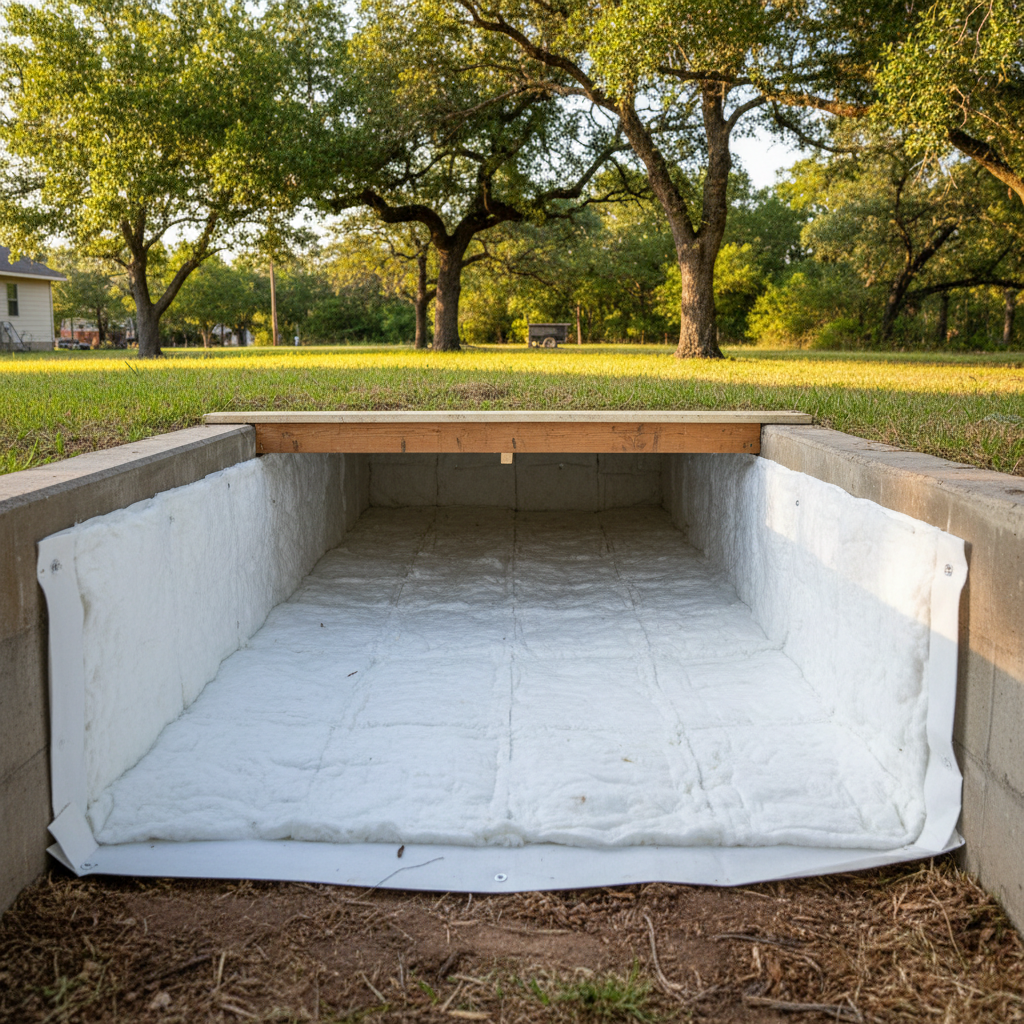
So, you're thinking about insulating your crawl space. Smart move, that. It's one of those jobs folks often forget about, but honestly, it can make a huge difference in how comfy your home feels, what you pay for energy, and even the air you breathe. The big question, though, is what's it actually going to cost you right here in San Marcos?
Look, I've been doing this a long time — seen all sorts of crawl spaces, believe me. From those nice, dry, easy-to-get-into ones in newer homes up in the Blanco Vista area, to the really tight, damp spots under some of the older places downtown. There's no single price for everyone, but I can definitely give you a solid idea of what to expect and what makes those numbers jump around.
What Makes the Price Tag Change?
A few key things really push the price up or down. You should get a handle on these before you even ask for a quote:
Crawl Space Size and How Easy It Is to Get Into: This is probably the biggest factor, hands down. A bigger crawl space means more material and more hours for the crew. If it's super tight, really low to the ground, or just plain hard to access, that's going to bump up the labor cost. We're talking about our guys crawling on their bellies for hours, sometimes in pretty uncomfortable conditions. And if we have to haul out a bunch of old junk or debris before we can even start? That's extra time, too.
What Kind of Insulation You Pick: This is another huge one. Are we talking about traditional fiberglass batts, mineral wool, or maybe even spray foam? Each type has its own cost per square foot for the material itself. Fiberglass batts are usually the cheapest upfront, but they don't do well with moisture. Mineral wool is better, but pricier. Spray foam, especially the closed-cell kind, costs the most for material, but it also acts as a vapor barrier and air sealer all at once. That can be a real game-changer for moisture control, especially with our humid Texas summers, don't you think?
Getting Rid of Old Insulation: If you've got old, wet, moldy, or rodent-infested insulation down there, it absolutely has to go. That's a separate charge for the labor and getting rid of it. Trust me, you do not want to just insulate over that kind of mess.
Moisture Problems and Fixing Them: This is critical, especially here in San Marcos. We get a lot of rain, and our clay soils really hold onto moisture. If your crawl space is damp, has standing water, or shows signs of mold, insulating it without fixing the moisture problem first is just throwing money away. You might need a vapor barrier (that's a thick plastic sheet on the ground), dehumidifiers, or even drainage solutions. These are separate costs, yes, but often necessary for your insulation to actually work long-term.
Encapsulation vs. Just Insulating: Some folks just want to insulate the floor joists. Others want to fully encapsulate the crawl space, which means sealing it off from the outside air, insulating the walls, and putting down a heavy-duty vapor barrier. Encapsulation is a bigger project, more expensive, but it creates a conditioned space. That can be incredibly helpful for comfort and saving energy.
Typical Cost Ranges in San Marcos
Alright, let's get down to some actual numbers. Just remember, these are averages, and your specific situation might be a little different.
Basic Fiberglass Batt Installation (Floor Joists Only): For just putting in new R-19 or R-30 fiberglass batts between your floor joists, you're probably looking at $1.50 to $3.00 per square foot of crawl space. So, for a 1,500 sq ft home, that's roughly $2,250 to $4,500. This assumes decent access and no big surprises.
Mineral Wool Batts (Floor Joists Only): A step up in how well it performs and how it handles moisture, mineral wool might run you $2.50 to $4.50 per square foot. For that same 1,500 sq ft, that's $3,750 to $6,750.
Crawl Space Encapsulation (Insulation + Vapor Barrier + Sealing): This is a more complete solution. This can range from $4.00 to $8.00 per square foot, sometimes even higher if there are serious moisture issues or a lot of prep work. For a 1,500 sq ft home, you're looking at $6,000 to $12,000+. This usually covers insulating the perimeter walls with rigid foam board or spray foam, putting a heavy-duty vapor barrier on the ground, and sealing up vents and any openings.
Spray Foam Insulation (Perimeter Walls): If you're going with closed-cell spray foam on the perimeter walls as part of an encapsulation, just the spray foam itself can be $1.75 to $3.00 per board foot (a board foot is 1 sq ft at 1 inch thick). So, insulating a 4-foot high wall around a 1,500 sq ft crawl space (which might have, say, 150 linear feet of wall) to R-15 (2.5 inches thick) would be around 150 linear feet * 4 feet high * 2.5 inches thick = 1,500 board feet. At $2.00/board foot, that's $3,000 just for the foam on the walls, not counting the vapor barrier or other work.
Add-ons: Getting rid of old insulation can cost $0.50 to $1.50 per square foot. A basic vapor barrier might be $1.00 to $2.00 per square foot. Dehumidifiers, drainage, or mold remediation can add hundreds or even thousands more, depending on how bad things are.
What Should a Good Quote Include?
When you get a quote from Infinite Insulation Company, or anyone else for that matter, make sure it's really detailed. It should clearly spell out:
The exact square footage or linear footage they'll be insulating.
The type and R-value of insulation they plan to use.
Whether removing old insulation is part of the deal, and any disposal fees.
Any necessary prep work, like cleaning or moisture control.
Specifics on vapor barriers, sealing, or encapsulation parts.
Labor costs and material costs, broken down.
A timeline for when they expect to finish the project.
Warranty information.
How to Avoid Paying Too Much
Don't just jump at the first quote you get. Grab at least three detailed estimates. Make sure you're comparing apples to apples – the same kind of insulation, the same amount of work. Ask questions, lots of them. A good contractor will take the time to explain everything to you. Be careful of anyone who gives you a super lowball price without even looking at your crawl space, or tries to pressure you into signing right away. A thorough inspection is absolutely crucial. If they don't actually go down there and really look around, they're just guessing, and you'll likely end up paying for it later.
Putting money into your crawl space insulation isn't just about saving cash on bills. It's about making your home healthier and more comfortable, plain and simple. Do your homework, ask the right questions, and you'll get a fair deal that really pays off in the long run.